
Imagine it’s time to do your business taxes. Usually you go to your CPA. You have your stack of papers, complex forms, statements, and business receipts. You sit down with your fancy new multi-function calculator on the desk and a stack of tax and legal reference books. You do your tax return and submit it. It looks great and you are proud of yourself…until you get a letter from the IRS. You take the letter to your CPA and after reviewing what you submitted, they spot the problem in a few minutes…because they’ve done this 1,000 times before. Your tools were sound, but having the tools doesn’t replace the need for others who know what they are doing. This is the world of AI we are in.
Now, think about last week. Somewhere in there, you handed something to AI that used to require a person. Maybe you needed to understand how a technical constraint worked, and you asked a chat window instead of the engineer sitting three seats away. Maybe you needed to know whether an idea had been tried before, and you didn't ping the product manager who would've remembered. Maybe you wrote the research plan “yourself” instead of pulling in the researcher.
It went fine by your standards, and you got it done quickly.
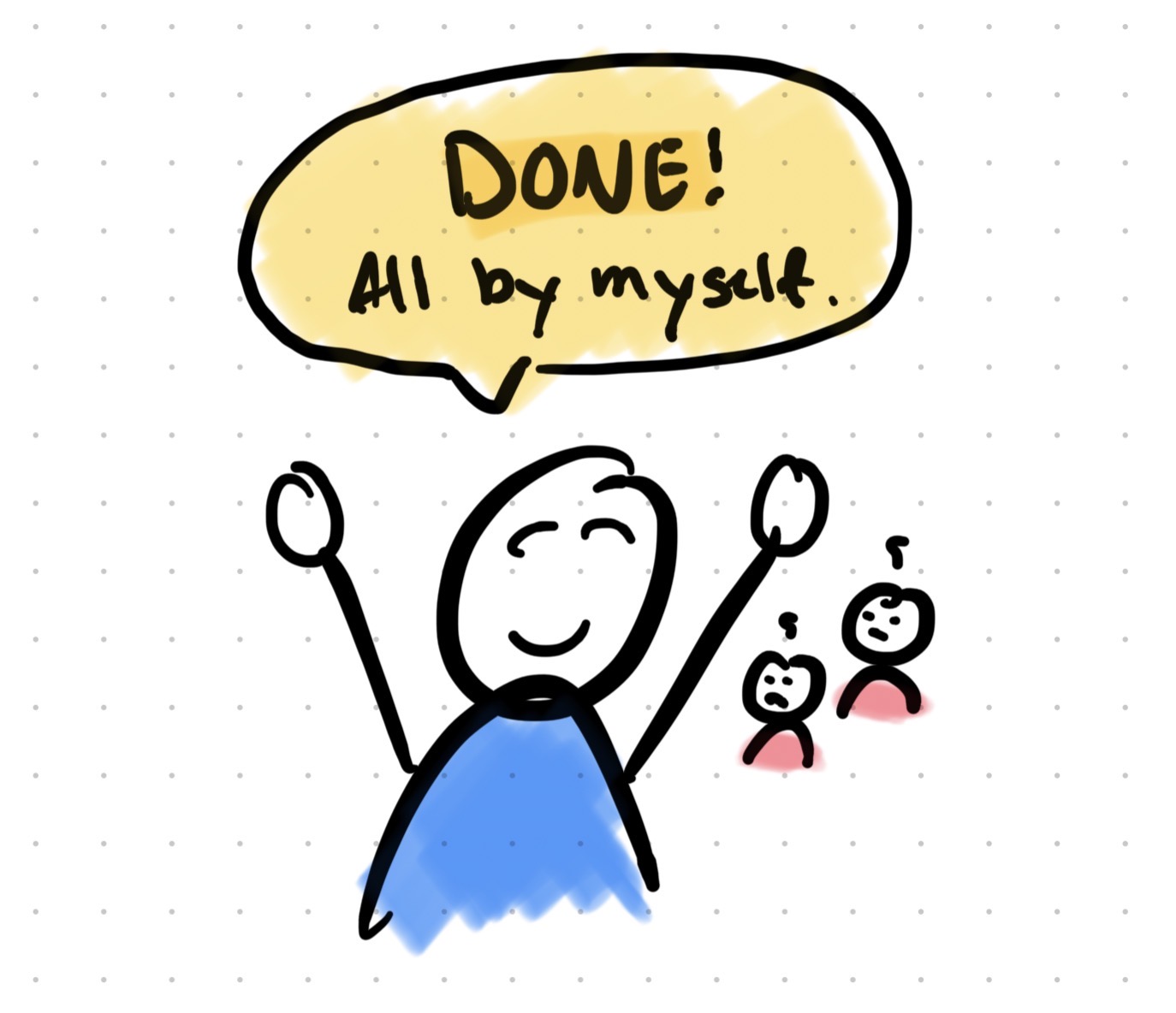
Social psychologist Kate Niederhoffer has a name for this. In a recent HBR roundtable, she called it displacement behavior. It's what happens when you'd rather work a problem through with AI than work it through with a colleague. Not because you dislike the colleague. Because the machine is right there, on call, with no waiting.
And it does go fine, you think. Right up until someone else realizes the thing you built isn't as good as it should have been. But, you couldn’t tell…and maybe you don’t care.
An Expensive Trade
AI made it all go faster. Much faster. You're doing things in an afternoon that used to take a week. And, you're doing it with fewer cooks in the kitchen.
But speed isn't the only thing. There's a second, more subtle part of this deal.
Working with people costs more than just time. It has a social dynamic. You have to interrupt somebody who's heads-down. You have to show half-formed thinking to a person who will remember that you showed it. You end up owing a favor. None of that is a speed problem. It's a social one that’s always been the price of collaboration.
AI requires none of it. It's available at 11pm. It's patient. It (almost) never sighs. It doesn't care that you asked a dumb question in March.
So it looks like a sweet deal. Faster work, your self-image intact, no favors owed. Win, win, win.
But, surprise! It isn't quite so sweet of a deal. The cost goes somewhere else. You’re just not aware of it…yet.
The Evaluation Problem
Ask AI to solve a design problem you’re familiar with. Watch what happens. You'll see trouble in seconds. It missed the context that makes this problem different from every similar problem. It gave you the most common solution that shows up in every portfolio piece since 2019. It's confident but you know it doesn’t work. It blows up the second a user with an incomplete account shows up. You can see all of it, immediately, because you've spent years building the judgment to see those kinds of systematic issues.
Now open a new thread. Ask it to size the engineering effort. Ask it to draft the PRD. Ask it to write the discussion guide for next week's sessions.
Looks great, now you have what you need. Nothing changed except your ability to see the flaws.
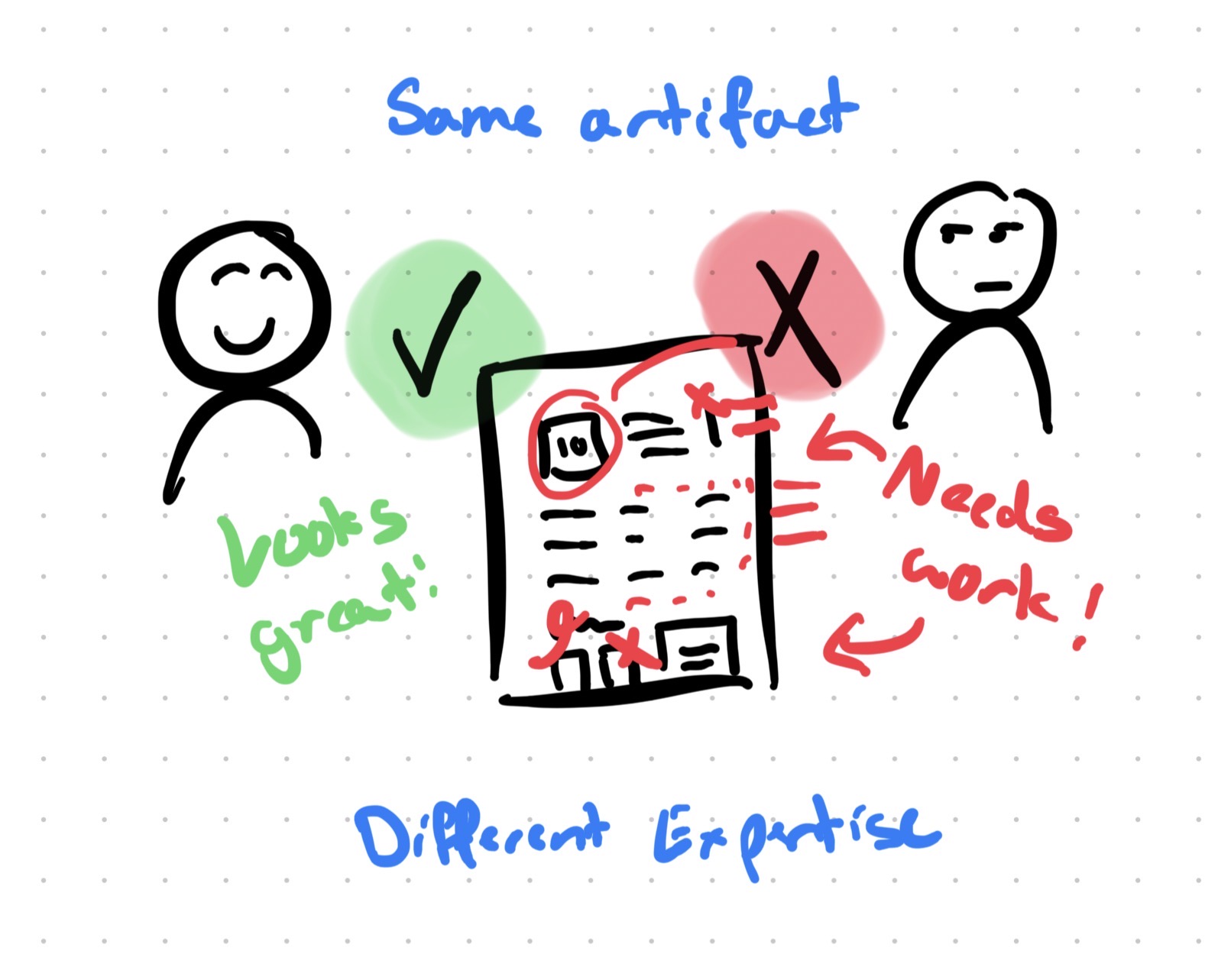
Michael Crichton described this effect in an example with newspapers. You read the article about your own field and catch every error in it, then turn the page and believe the next one completely. Same paper. Same reporters. Your skepticism ends with your expertise.
That's what's happening in your chat window. You trust the LLM where your judgment is weakest, because it provides a plausible enough answer. That’s cognitive closure doing its work.
So when you skip the product manager, (I hope) you're not thinking you're better than them. You're thinking AI seems good enough at their thing, but you probably lack the experience to judge that.
AI can do anyone’s job…poorly. You can only really tell when it's your job it does poorly.
Who Gets Cut
However, when you skipped that PM conversation, you didn't just “save 30 minutes”. You also removed the expertise you need to stay on the right track.
Disagreement can be uncomfortable. Some people want to circumvent it or avoid it altogether. For certain people, disagreement is perceived as unnecessary friction. Your mission isn’t to remove friction (to gain speed), because some friction is beneficial. Your mission is to choose which kind of friction to keep. Call it “productive friction”. It’s the friction that makes you and your work better.
Legal stopped this exact approach in Q1, and the PM remembers because they're the one who had to deliver the news. The pattern breaks at the tablet breakpoint, and the engineer knows because they shipped the last thing that broke there. Users told us the opposite of this six weeks ago, and the researcher can pull the clip. Every one of those people is putting something on the line when they create friction. They have history with your organization. They have consequences if they're wrong. Their name goes on the outcome.
AI has none of that. No memory of Q1. No fear. No caution. No consequences. That’s right, AI has no felt consequences. It has no hesitation or emotionally driven restraint.
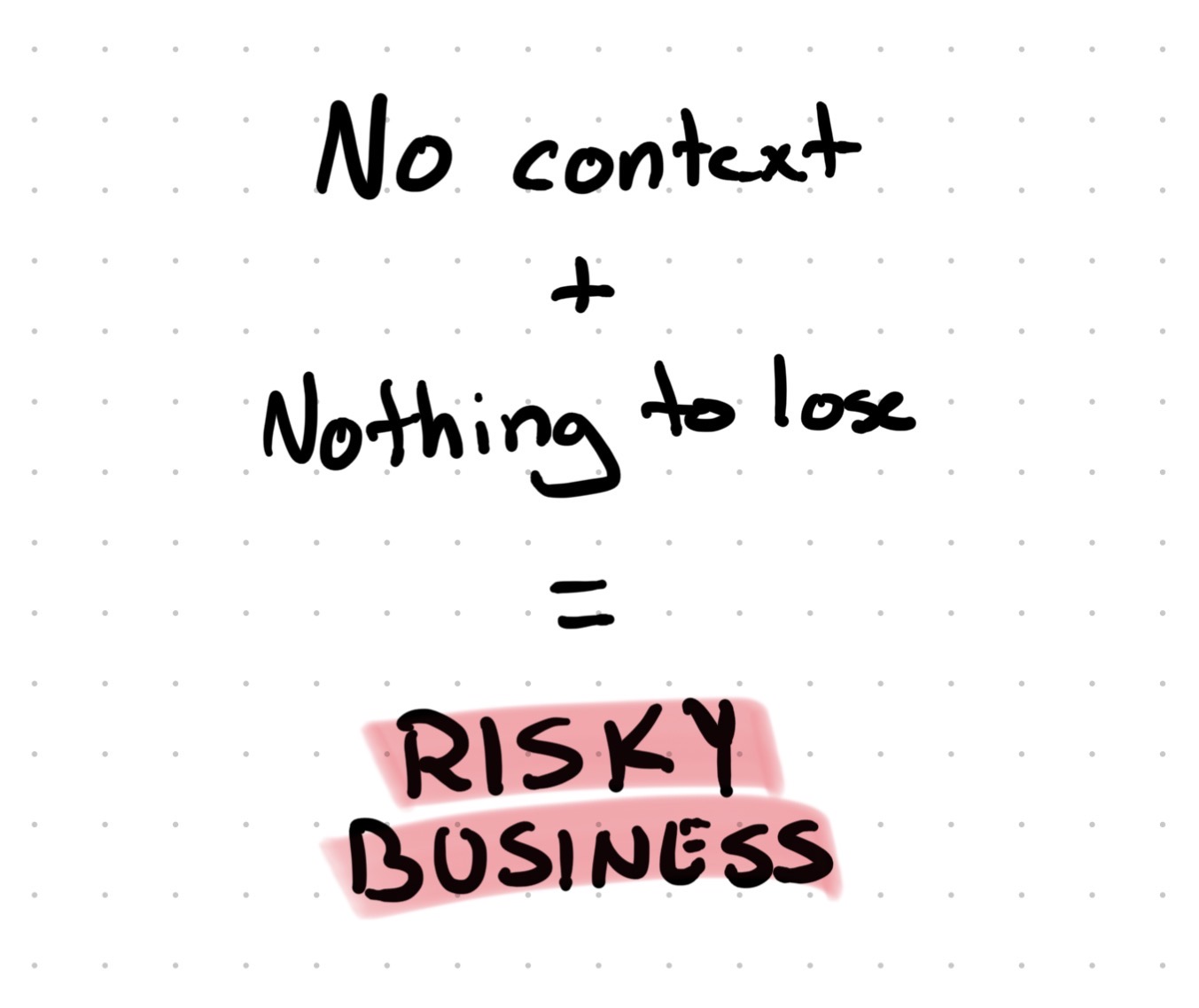
So it can easily agree with you. Not because it's flattering you, but because that’s what it learned to do. A collaborator with no stake in the outcome is going to be an easy collaborator, every single time. There’s nothing on the line for them.
Put the two together and you've got some risky business. You skipped the expert because you couldn't see what was missing. Then you took your uncertainty back to the machine. And the machine agreed. Eventually, the effects of that gap will hit the fan and someone will be on the receiving end of it. Yuck.
Scaling the Impact
So far, we’ve been considering an individual case. One person, working with AI, circumventing the need for others. But, you're not the only person doing this. Your engineer thinks AI handles the design work fine. Your researcher thinks it handles the technical scoping fine. Your product manager thinks it handles the research fine. You think it handles product strategy fine.
Everyone on your team is confidently routing around the colleague qualified to make the judgment call in their scope of expertise (and responsibility).
Every person is moving faster than they've ever moved and feeling good about it. They’re probably praised for it. Now, the people with the expertise to provide productive friction can’t, because they weren't invited into the work.
Peter Drucker built his whole idea of knowledge work on a simple point: specialized knowledge produces nothing on its own. A designer's judgment has worth when it meets an engineer's constraints and a researcher's evidence and a PM's priority. The value shows up in the combination. Displacement deletes the combination and leaves you with a lot of confident, sycophantic output.
The net effect of this loss is that your product will become the sum of a thousand (often invisible) decisions made by one person holding partial context. It isn't wrong in one obvious place. It's slightly off everywhere. The flow makes sense to the person who designed it and confuses the people who use it. The naming is consistent in this new feature but inconsistent with everything else in the platform. The edge case that everybody would have caught in a five minute hallway conversation ships and shows up as a support ticket eleven weeks later.
None of it traces back to “one bad decision”. It’s a litany of subtle defects that build debt and undermine value. That's the scary part. It’s not one thing, it’s everything. It’s not a particular documented decision in a meeting, it’s the entire solo, AI-slop process.
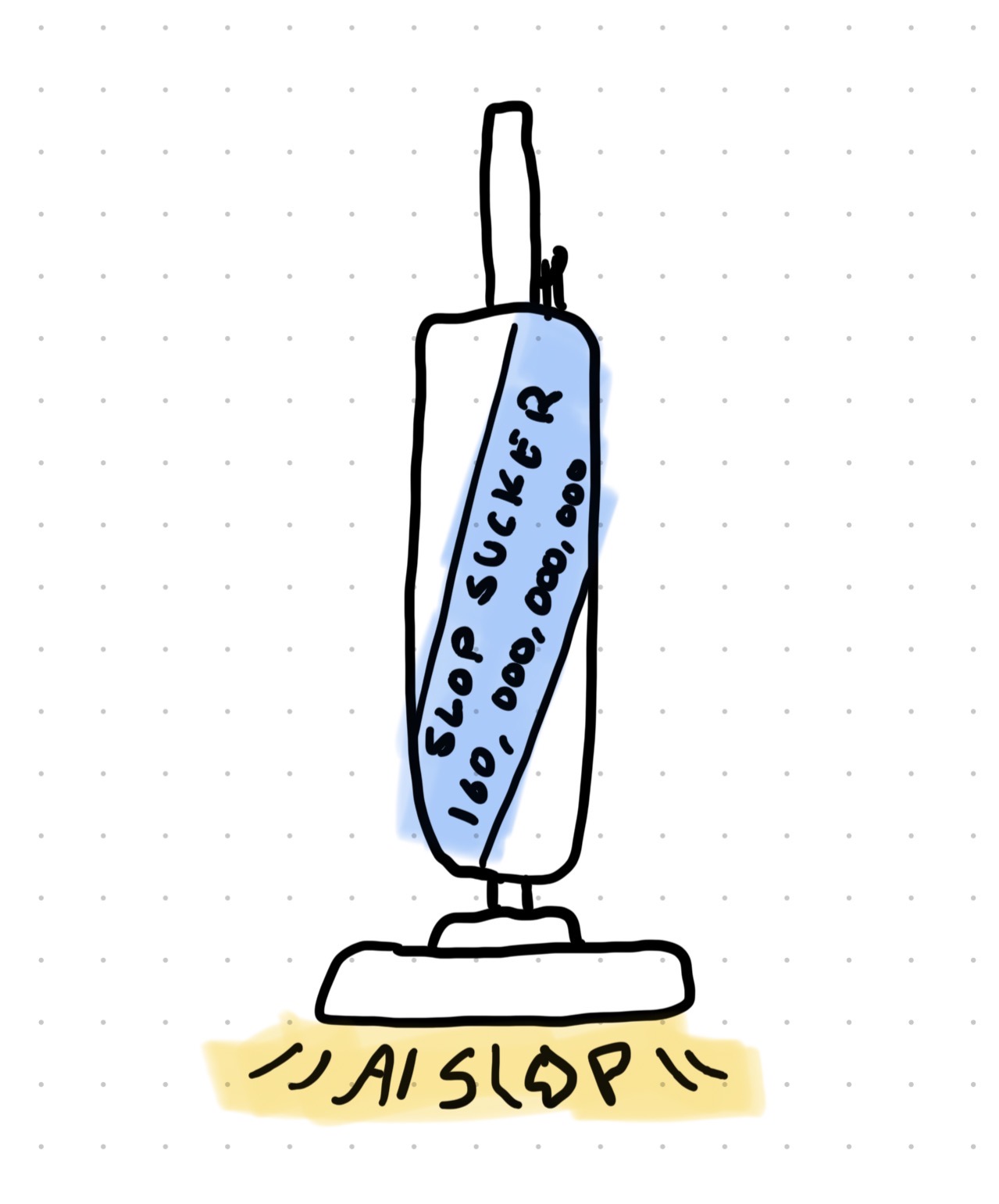
How much does it cost us when individuals outrun collaboration? Atlassian estimates an annual cost of $161 billion across the Fortune 500. The same research found roughly half of workers now spend more time cleaning up AI output than they'd have spent doing the work themselves. It’s my personal observation that disentangling someone else’s mess is cognitively far heavier than the work to create it. My favorite term for this is “workslop grenades”.
For you, in that moment, the speed was true. You just measured it in one limited place. The “slow” parts got passed downstream to someone else, and they got more expensive along the way.
When you’re the one moving at warp 10, the indication that something's wrong is almost undetectable. It’s a blip in your periphery. If you’re deep into the AI solo act, ask yourself when someone last told you that you were wrong. Someone else with different expertise than yourself pushing against you. If you can't remember, that's not evidence you've gotten better. It’s evidence that you’ve cut others out of your loop.
Preserving Human Collaboration
None of this means you should unsubscribe from AI and go find a whiteboard. Instead, Niederhoffer draws the distinction: there's a difference between using AI to support a relationship and using it to substitute for one.
Using AI to create a first draft of the message you've been dreading, so you actually send it? That's support. Working out your thinking before a hard conversation so you show up clear instead of defensive? Support. Getting up to speed on a domain so you can ask your engineer a better question instead of a lazy one? Again, support. These are good uses.
Using it so you never have to have the conversation? Danger, Will Robinson.
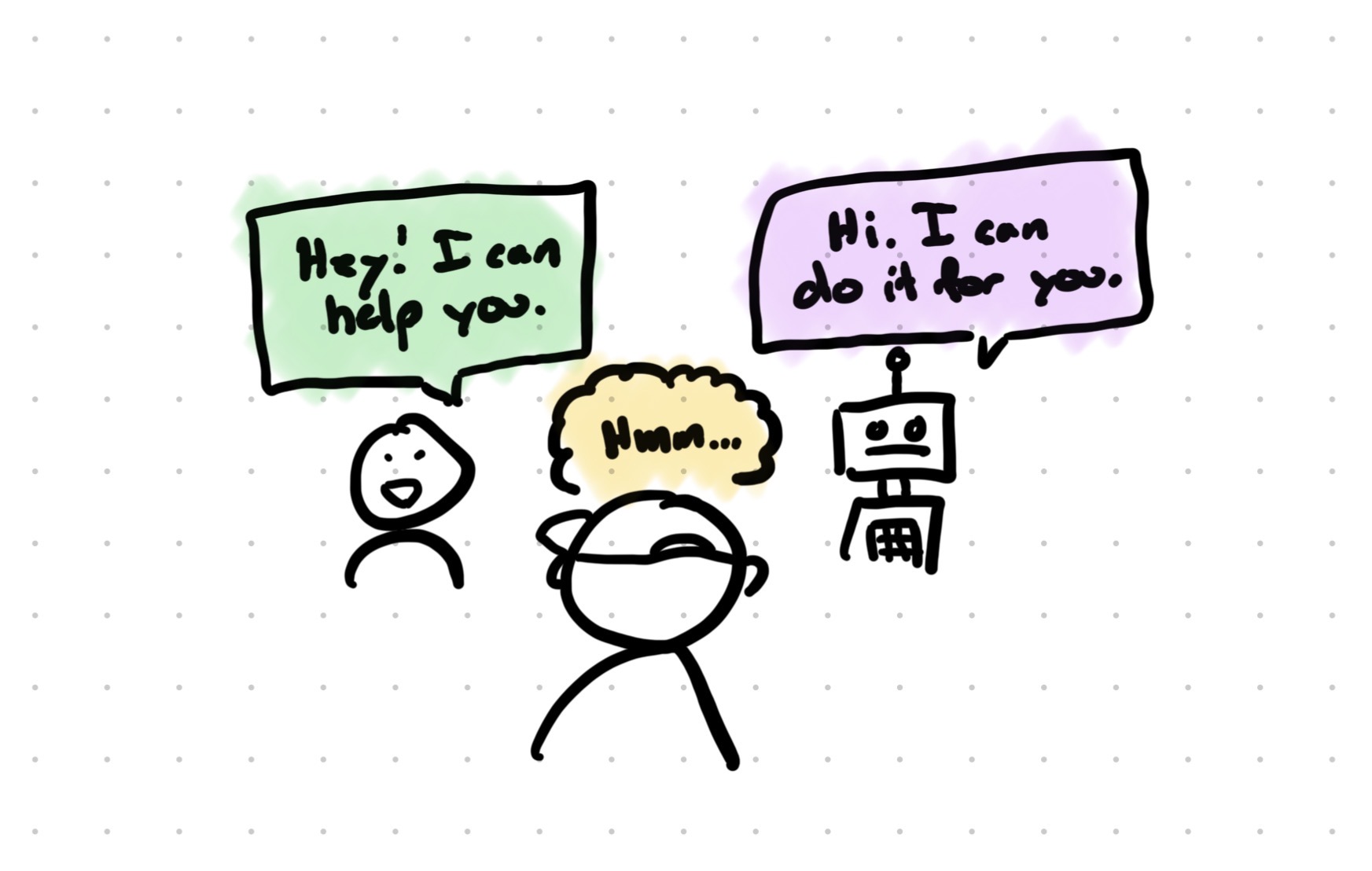
With a quick moment of reflection, it’s easy to spot: Did AI help me show up better to a person, or did it help me avoid them entirely?
Before you criticize me as anti-AI, you need to know that I use AI a LOT. I've built multiple systems in my life to use it. It helps me think more broadly. It argues with me (poorly). What it doesn't do is replace people. I've been deliberate about that. Because people have the life-lived context to bring me closer to success.
Practical Suggestions
What do we do? Here’s a few ideas after I’ve been reflecting over the past year of working alongside AI with my teams.
For the individual contributor:
- Draw a line between your expertise and the expertise of others. Engineering estimates, product priorities, legal exposure, research method, pricing, whatever your list is. Those are your “no-solo” zones. AI can help you prepare, but it can’t replace your relationship with experts.
- Take the “AI answer” to the expert. Don’t ask for approval, ask them to help you think through the work you’ve done so far. You'll learn more from their feedback and interactions than from anything the model produced.
- When the AI model agrees with you quickly…suspiciously quickly, slow down and get skeptical. Speed of agreement is not evidence of quality. It's evidence of no resistance…and we know the dangers that causes.
- Bring unfinished work to people on purpose. Rough, ugly, obviously incomplete. Polished work invites approval. Rough work invites collaborative thinking. This requires humility on your part. Do it anyway.
For the leader:
- Decide what things require a human, and at what level of involvement. You’re not making rules, just a short list of guiding statements your team can internalize and act on.
- Proactively measure trust as a leading indicator, not a lagging one. Niederhoffer's point is that trust starts dropping before the coordination problems show up in your delivery metrics. By the time coordination issues show up, trust has probably already been weakened.
- Ensure quality asynchronous communication. Niederhoffer's early finding is that teams doing a lot of async work don't show the same coordination damage, even under heavy AI use. Teams don't need more meetings, they need more small moments of shared context. Async can catch collaboration gaps without anybody scheduling another meeting.
Where To Go From Here
So, if you want to avoid that letter from the IRS, make sure you aren’t saving time by cutting experts out of your work.
You feel faster. It’s true you are moving faster. But, now with fewer people. Cutting people out to move faster isn’t necessarily the best (or cheapest) path. Take a moment to consider what shipped. Not your velocity, not your output, not how good the last three weeks felt. Look at the thing itself. Then, ask yourself who wasn't in the room when it took shape and the effect that had on the end result. What risks are there now? What value is obscured? What debt (technical, UX, or cognitive) now exists?
The expensive part of working with people wasn’t the delay. It was that they could see what you couldn't, and when that’s missing the true cost begins to show.